Microgaming single deck blackjack
• House edge and rules
• Basic strategy charts
• Unusual plays
• The three-box trick
• The weeds
• The really long grass
• Game location
The hero returns
The Microgaming single deck game started out life in the late 1990s, called simply “single deck”. When Microgaming upgraded to the viper software in 2003 the game all but vanished - a couple of casinos kept it in while most dropped it. However, in 2005 Microgaming added a “gold series” to the tables game section, and this included the original single deck game, with the exact same rules as before, now called “classic blackjack” and also “classic blackjack gold”.
When casinos remove quality games they do not typically reintroduce them. As such, Microgaming’s reintroduction of the single deck game was a refreshing break from the norm.
House edge and rules
This game has a payout of 99.87% and as such a house edge of 0.13%.
These are the rules:
• Dealer stands on soft 17
• Double 9, 10 and 11 only
• European no hole card
• No double after split
• Draw to split aces.
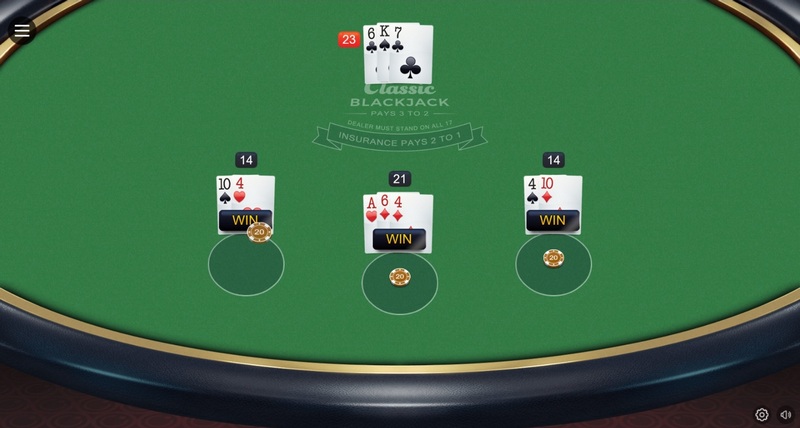
The ability to draw additional cards to split aces is a rare and advantageous rule - take a look at this screenshot:

Having split my aces, I received an eight on the first one and another ace on the second. Normally I’d be stuck with my score of soft 12 on that second hand, but I can continue to draw - and after three additional cards I make 21, resulting in a push on the one hand and a win the other other. Without the ability to draw to split aces I’d have pushed the one hand and lost the second.
Basic strategy charts
The following are the basic strategy tables for this set of rules:
H = hit, S = stand, D = double, P = split.
| Your hand | Dealer upcard | |||||||||
|---|---|---|---|---|---|---|---|---|---|---|
| 2 | 3 | 4 | 5 | 6 | 7 | 8 | 9 | 10 | A | |
| 17+ | S | S | S | S | S | S | S | S | S | S |
| 16 | S | S | S | S | S | H | H | H | H | H |
| 15 | S | S | S | S | S | H | H | H | H | H |
| 14 | S | S | S | S | S | H | H | H | H | H |
| 13 | S | S | S | S | S | H | H | H | H | H |
| 12 | H | H | S | S | S | H | H | H | H | H |
| 11 | D | D | D | D | D | D | D | D | H | H |
| 10 | D | D | D | D | D | D | D | D | H | H |
| 9 | D | D | D | D | D | H | H | H | H | H |
| 5 - 8 | H | H | H | H | H | H | H | H | H | H |
| Your hand | Dealer upcard | |||||||||
|---|---|---|---|---|---|---|---|---|---|---|
| 2 | 3 | 4 | 5 | 6 | 7 | 8 | 9 | 10 | A | |
| A9 | S | S | S | S | S | S | S | S | S | S |
| A8 | S | S | S | S | S | S | S | S | S | S |
| A7 | S | S | S | S | S | S | S | H | H | S |
| A6 | H | H | H | H | H | H | H | H | H | H |
| A5 | H | H | H | H | H | H | H | H | H | H |
| A4 | H | H | H | H | H | H | H | H | H | H |
| A3 | H | H | H | H | H | H | H | H | H | H |
| A2 | H | H | H | H | H | H | H | H | H | H |
| Your hand | Dealer upcard | |||||||||
|---|---|---|---|---|---|---|---|---|---|---|
| 2 | 3 | 4 | 5 | 6 | 7 | 8 | 9 | 10 | A | |
| As | P | P | P | P | P | P | P | P | P | P |
| 10s | S | S | S | S | S | S | S | S | S | S |
| 9s | P | P | P | P | P | S | P | P | S | S |
| 8s | P | P | P | P | P | P | P | P | H | H |
| 7s | P | P | P | P | P | P | H | H | S | H |
| 6s | P | P | P | P | P | H | H | H | H | H |
| 5s | D | D | D | D | D | D | D | D | H | H |
| 4s | H | H | H | H | H | H | H | H | H | H |
| 3s | H | H | P | P | P | P | H | H | H | H |
| 2s | H | P | P | P | P | P | H | H | H | H |
Unusual plays
There’s one unusual play here: splitting AA against a dealer ace. This would be incorrect in most ENHC games in which the dealer doesn’t check for blackjack prior to the play of the hand. However, the added advantage of being able to draw to split aces, rather than just receiving one card, makes splitting the correct move.
Also, note that 77 v. 10 is a STAND in this game, not a hit
You can enhance your return in single-hand play still further by adopting the “composition dependent” basic strategy alterations - please refer to the S17 composition-dependent exceptions page for details.
However, that is not the last improvement you can make to your return, and I’ll cover this in the next section.
The three-box trick
This is for the hard-core player - if you’re happy with an excellent 0.13% house edge you can ignore this section and either navigate you way back to the page top or carry on the the game location section. But if you'd like to know the simple steps that reduce the casino advantage to a razor thin 0.06%, read on.
You need to choose the multi-hand game:
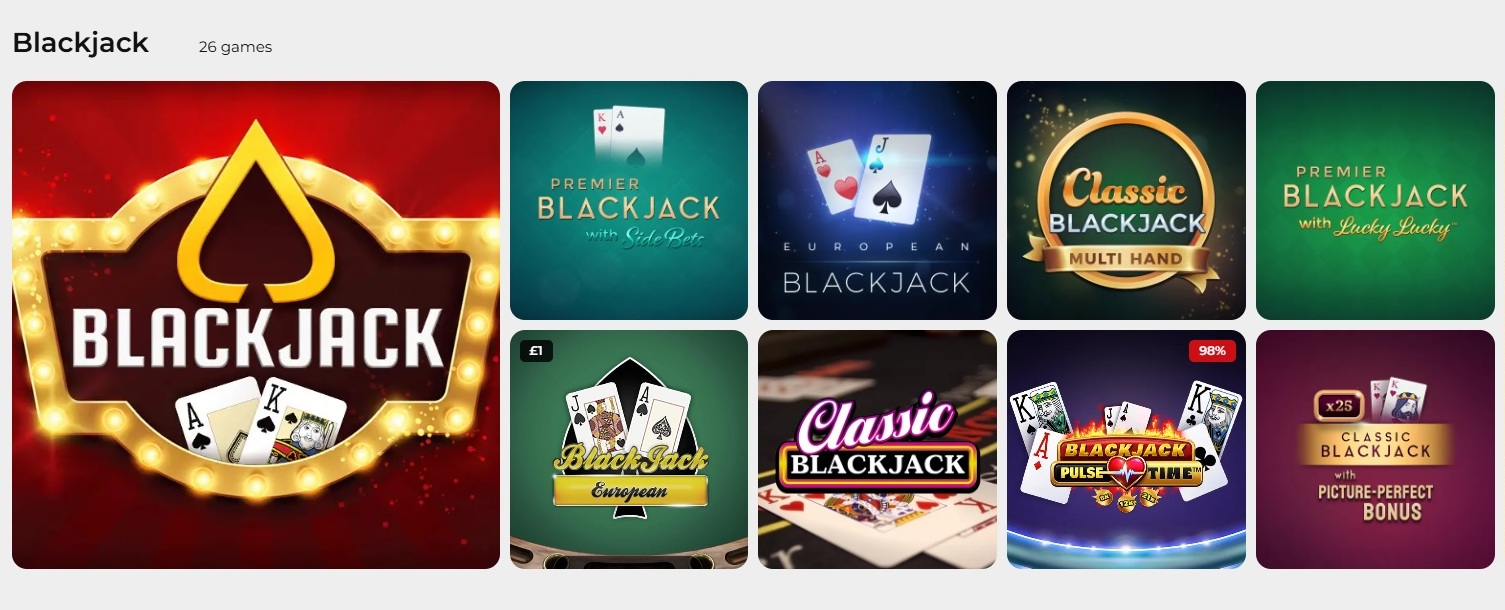
Choose your bet size carefully as you’ll be dealt three hands of cards to three boxes - choose £10 and you’ll have 30 pound’s worth of bets on the table. However, if you select the wrong betsize you can remove it by clicking the “clear” button. Once you’re happy with that, click “deal” and you’ll be looking at something like this:
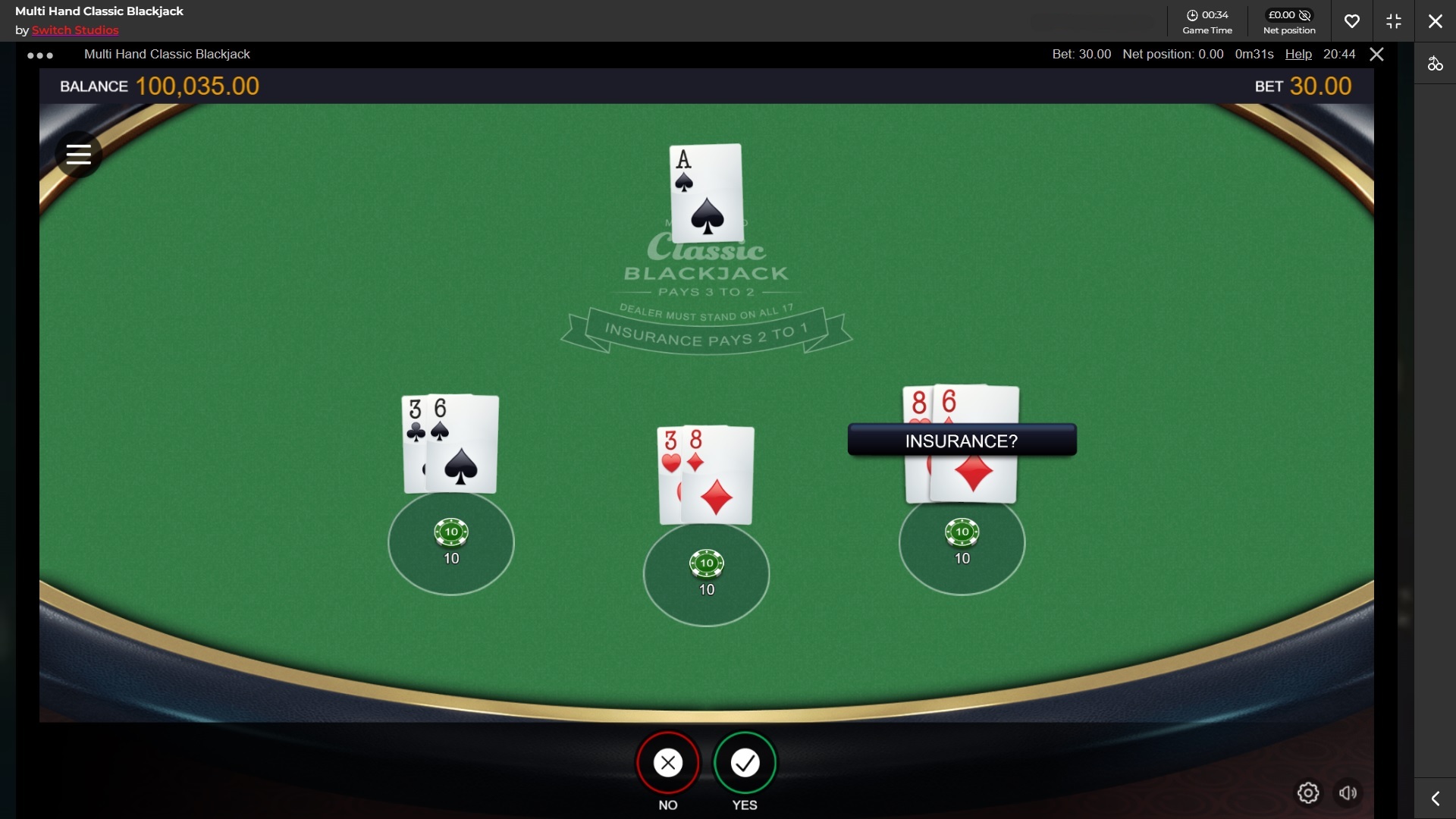
Now you make your play decisions. The dealer’s got an ace and, as usual, “insurance” is on offer. We normally select “no” for the first box and the same for the other two as we pass on - insurance is always the wrong choice according to basic strategy - so did I do something wrong when I took insurance?
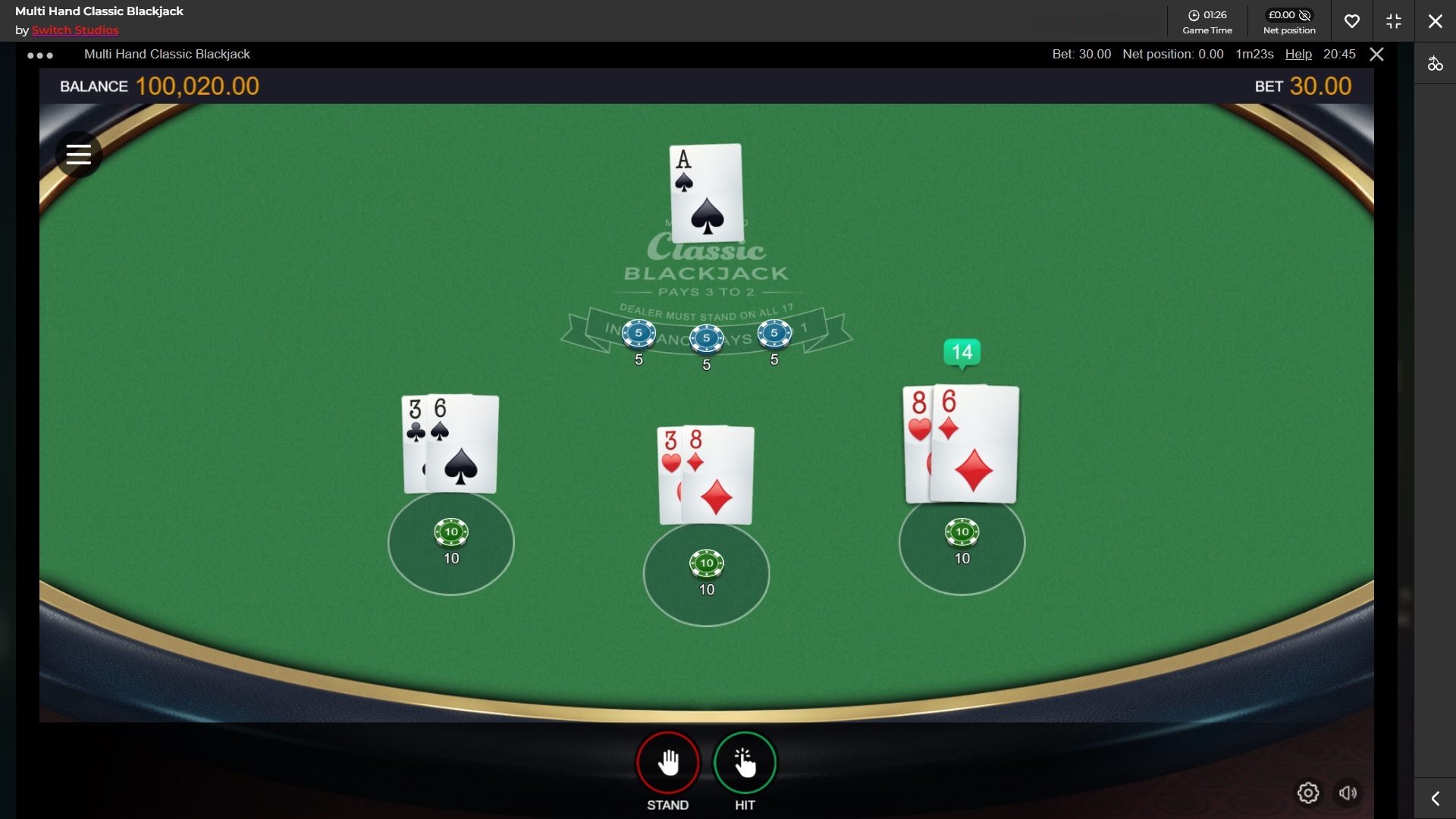
According to basic strategy this is wrong, but here's the thing: I can make a better informed choice on the basis of the cards I see on the table. This is quite a unique position to be in in the online gambling universe, understanding which involves getting into the blackjack “weeds”.
The weeds
In blackjack, small cards like 2s, 3s, 4s, 5s and 6s are bad for the player. Big cards like the 10s and aces are good. The reason is that 10s and aces make blackjacks and high-scoring doubles more likely. Small cards don’t make blackjacks and are bad for doubles. But for the dealer, 10s and aces are of no value - he doesn’t get paid extra for blackjacks and he can’t double. But small cards are useful - they help him to not bust his hand.
When cards are removed from the deck as they’re placed in the player’s betting circle they’re no longer available to be dealt - and they affect the remaining deck. Since online games are mainly multi-deck and are reshuffled after every round, this almost always has no effect.
But in single deck, individual cards become more important. And if you can see an increased number of them on the baize, that importance radically increases - sometimes there are enough small cards or big cards on display to give you information about the remaining deck that you can actually take advantage of.
For example, although taking “insurance” is usually a bad play, it actually becomes a good one if you know there are more big cards - and so potentially more tens for the dealer’s blackjack - waiting to be dealt from the remaining deck. But how can you know this?
As the dealer deals the cards onto the baize, give the 2s, 3s, 4s, 5s and 6s a score of “plus one”. And as tens and aces are dealt, score these each as “minus one”. Once the three hands plus the dealer’s upcard are on display, you’ll have an overall total in your head - and there’s no rush, you can take time to recount if you think you’ve gone wrong. Let’s say that the number you’ve arrived at is “3”. Now what?
Now you need to apply the simple rule changes below, bearing in mind that a positive number means “that number or higher” and a negative means “that number or lower”.
| The “super 16” basic strategy changes for single deck, based on the count | ||
|---|---|---|
| Hand | Decision | Count |
| Insurance | “yes”! | 3 |
| 16 vs. 10 | stand | 0 |
| 15 vs. 10 | stand | 4 |
| 16 vs. 9 | stand | 5 |
| 12 vs. 3 | stand | 2 |
| 12 vs. 2 | stand | 3 |
| 10/10 vs. 5* | split | 5 |
| 10/10 vs. 6* | split | 4 |
| 9 vs. 2 | double | 1 |
| 9 vs. 7 | double | 3 |
| 12 vs. 4 | hit | 0 |
| 13 vs. 2 | hit | -1 |
| 12 vs. 5 | hit | -2 |
| 12 vs. 6 | hit | -1 |
| 13 vs. 3 | hit | -2 |
* You can only split 10s when they’re of the same suit.
Now go back to the “insurance” decision I made:
There’s an ace, two 3s, two 6s and two 8s in view.
The ace counts as -1.
The two 3s and two 6s are each worth 1, so together they score +4.
We ignore the two 8s.
So, −1 + 4 = +3.
And if we check the “insurance” rule, we find that we take the insurance bet at +3 (or higher). Since I have “+3”, I take insurance.
The dealer made blackjack, all my hands lost but the “insurance” bets all won and I broke even for the round.
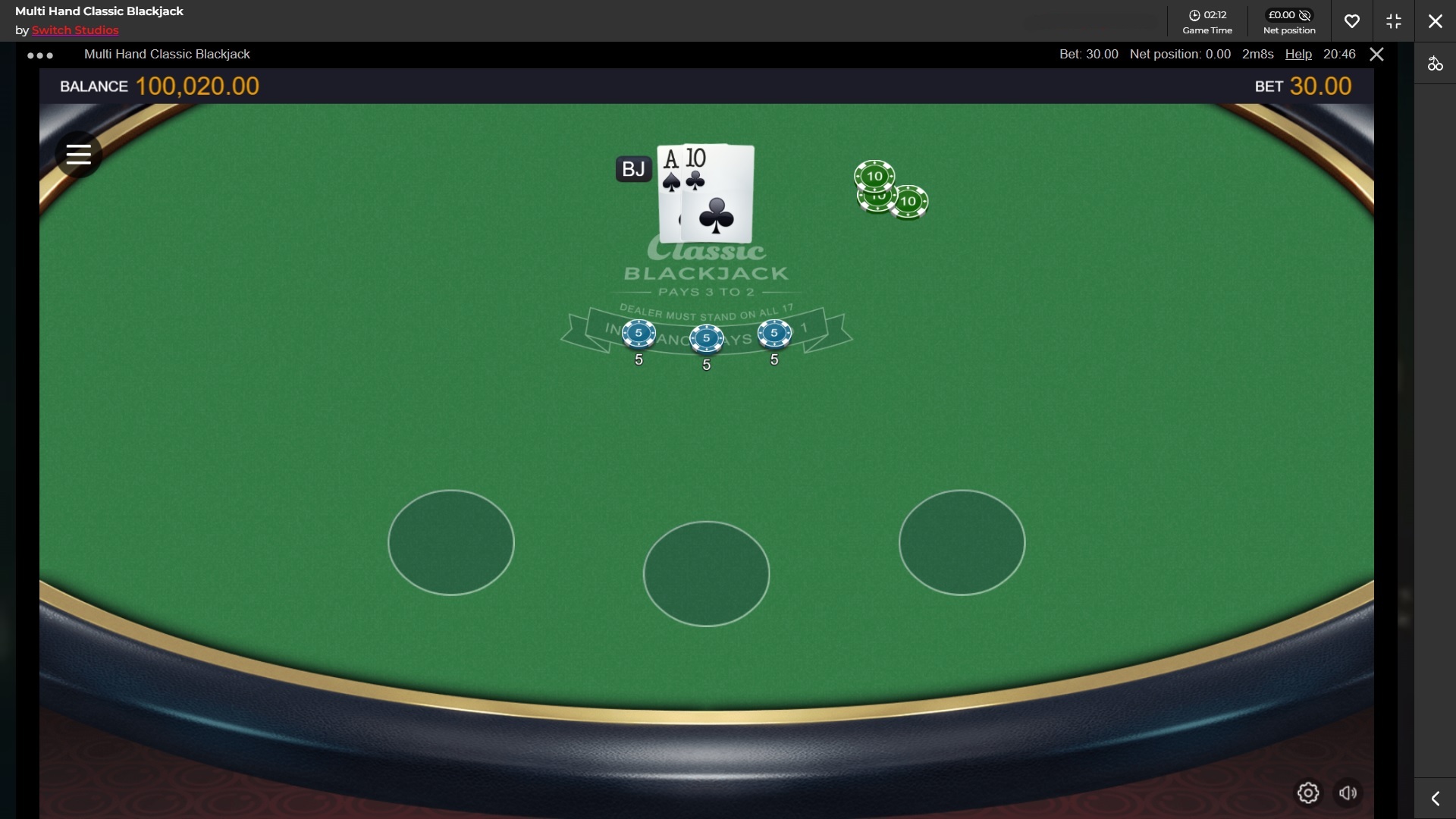
Of course, the “insurance” side bet is always available, and basic strategy says that you should never take it. But the unusually large numbers of cards in front of you enable you to make a better-informed choice, for this bet and also the fourteen others listed in the table above.
And that’s how you can reduce the 0.13% casino edge to a razor thin 0.06%. But do you want to know exactly how that happens, from the first hand to the last?
The really long grass
This is the casino advantage on hands one, two and three:
| How the advantage swings from casino to player over the three hands | |||
|---|---|---|---|
| Hands | First hand | Second hand | Third hand |
| Casino advantage | 0.12% | 0.08% | -0.02% |
You start with a fractional advantage over the baseline house edge of 0.13% because you can see those four additional cards, in hands two and three, which allow you to refine your strategy.
As you then move to box two you gain more information as more cards are dealt, allowing you potentially more strategy refinements and so pulling the house edge down further.
And when you get to box three you have the best information of all with the maximum number of cards in view, and this pushes that hand to being fractionally in your favour.
And that gives you this...
| Balancing the blackjack baize: the numbers |
0.12 + 0.08 - 0.02
3
= 0.06
|
|---|
...which is a house edge of just 0.06%.
In summary: if you’re happy with a very low 0.13% house edge, just play the correct basic strategy and don’t worry about the minutiae.
But if you want a return just about as close to a hundred percent as it’s possible to get, familiarise yourself with the super 16 strategy changes and apply them as the count dictates - there’s no rush, and the same as players often consult basic strategy cards in bricks & mortar casinos, you can consult the chart during play.
Game location
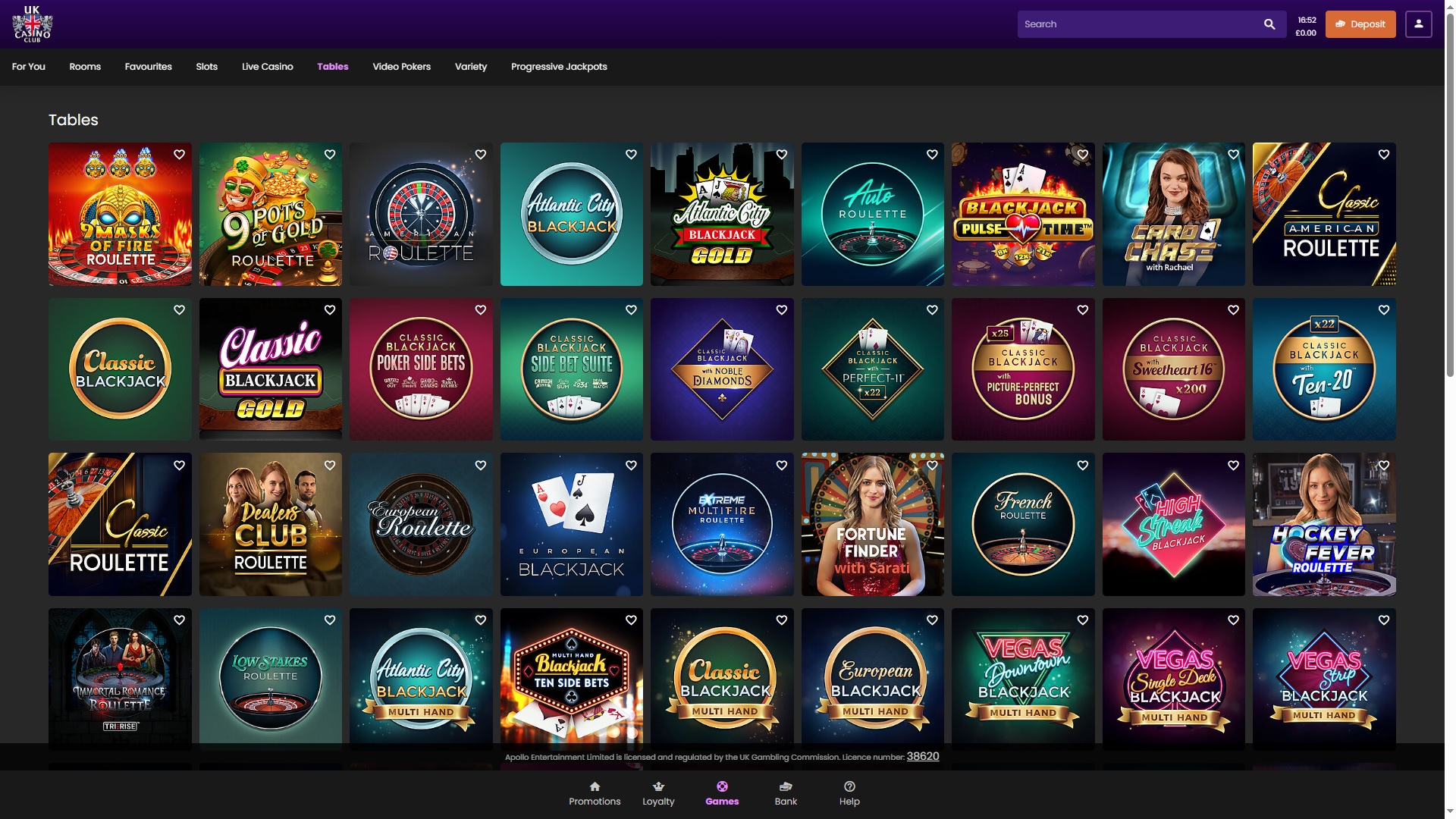
After login at the casino, click on the “tables” tab and a couple of versions of the classic blackjack game should be available - this is the interface with the single hand version only:
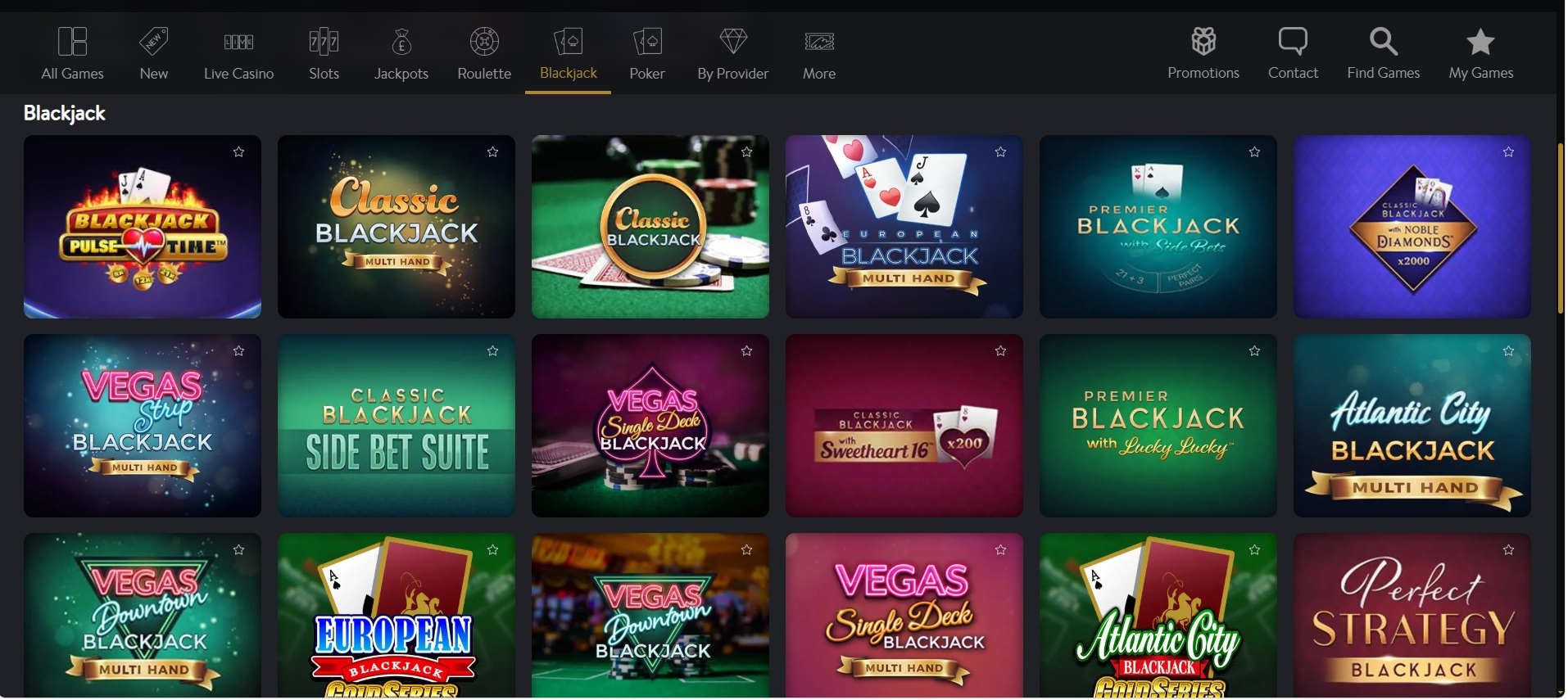
And this is one with the multi-hand game:
© 2005 - 2026 Hundred Percent Gambling